


“The opposite of love is not hate, but indifference.”
— Elie Wiesel
This isn’t the essay I had planned for this week.
It’s late. I can’t sleep. And when that happens, I usually end up reading the news longer than I should, hoping, foolishly, that something will suddenly make sense.
So this is an extra essay. A middle of the night one. The regularly scheduled piece will still arrive Tuesday morning, as promised. But tonight felt like it needed words before sleep, or silence, could return.
Like many others, I find myself heavy with sadness about where we are as a country. Sad about the erosion of empathy. Sad about how easily compassion gives way to indifference.
Saddest of all is watching communities that once taught me how to care now struggle to recognize harm when it arrives wearing familiar language. Watching institutions formed around truth and love grow comfortable with half truths, distortions, and stories that make cruelty feel necessary or justified. Watching people I once prayed beside, learned from, trusted, now look away without flinching, hands folded, hymns still on their lips.
It’s evil.
Underneath all of this, one question keeps returning.
What do we do with this kind of evil?
I’ve long since let go of the idea that evil looks like a devil with a pitchfork. It doesn’t. It isn’t a monster from the Upside Down, waiting to be vanquished by a last-minute super strategy. Evil today is far less dramatic and far more effective. It wears uniforms. It hides inside policies. It hardens into systems that make harm feel procedural, distant, justified. Less Stranger Things, more corporate suits. Evil is often banal, defended, bureaucratic. It rarely announces itself as cruelty. It calls itself order. Or safety. Or faithfulness.
And still, people are walking.
I keep thinking about the monks moving slowly across this country. Robes dusty. Prayers steady. A dog padding quietly alongside them. No slogans screamed. No fists raised. Just bodies placed deliberately in the path of indifference. A refusal to disappear. A disruption that does not desecrate the soul.
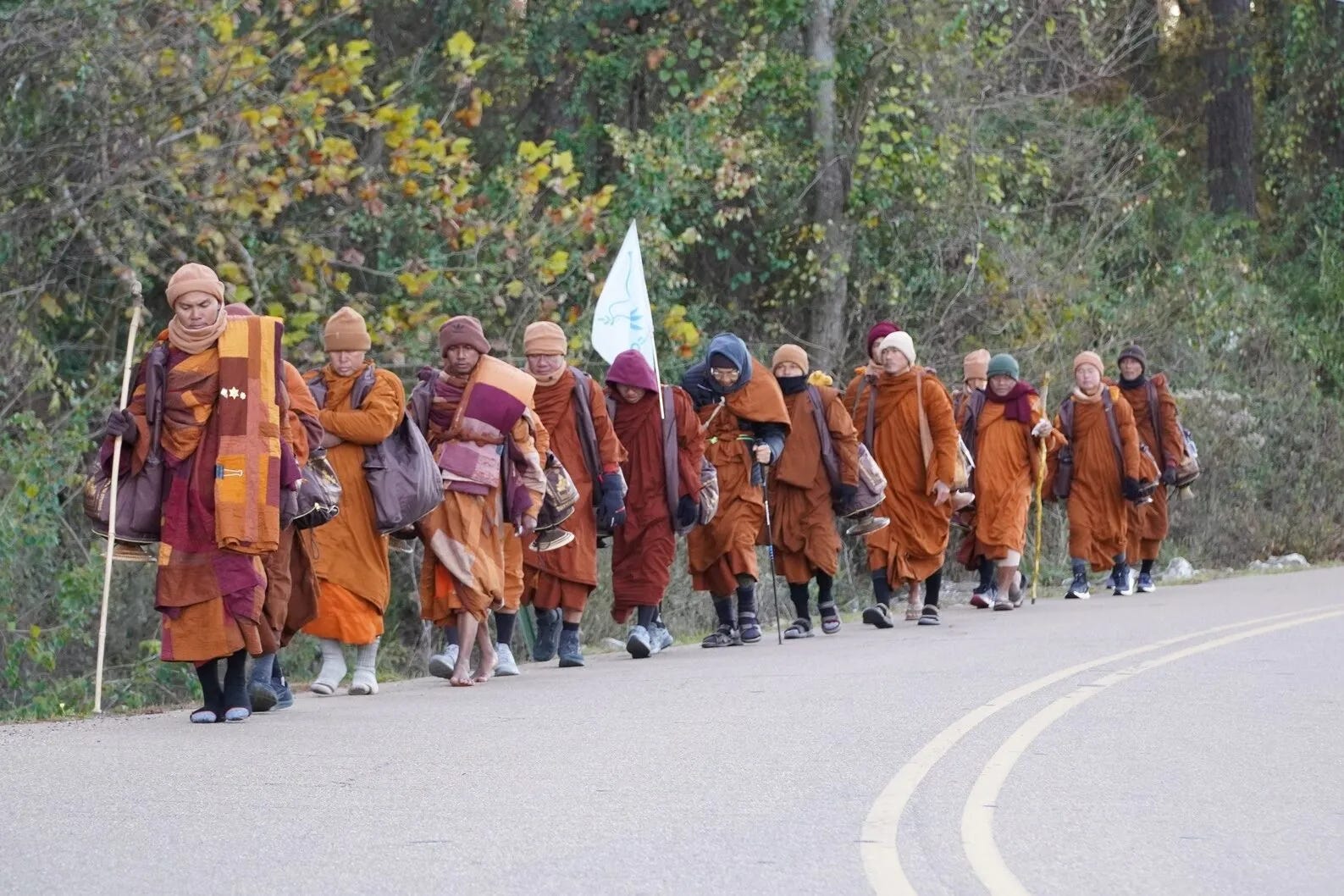
This is not passivity.
It is courage of a different order.
There is an older witness to this way of confronting evil.
Martin de Porres was born to an enslaved African mother and a Spanish father. In the monastery where he lived, he was tolerated but not welcomed. He faced constant racism and humiliation. Some of the monks mocked him. Some tried to provoke him.
When brothers spoke cruelly or spread lies, Martín quietly cleaned their cells. When they were ill, he brought them food. He prayed for them by name.
When asked why he didn’t defend himself, Martín reportedly said, “If I correct them with love, perhaps God will do the rest.”
This was not denial.
It was refusal.
A monk who had been especially cruel later fell gravely ill. Martín cared for him day and night. When the man wept, it was not from pain, but from shame.
Evil often collapses when it is no longer mirrored.
Cruelty loses its footing when it is met with dignity instead of retaliation.
Love exposes what accusation cannot.
Martín does not deny injustice.
He refuses to let it rewrite his soul.
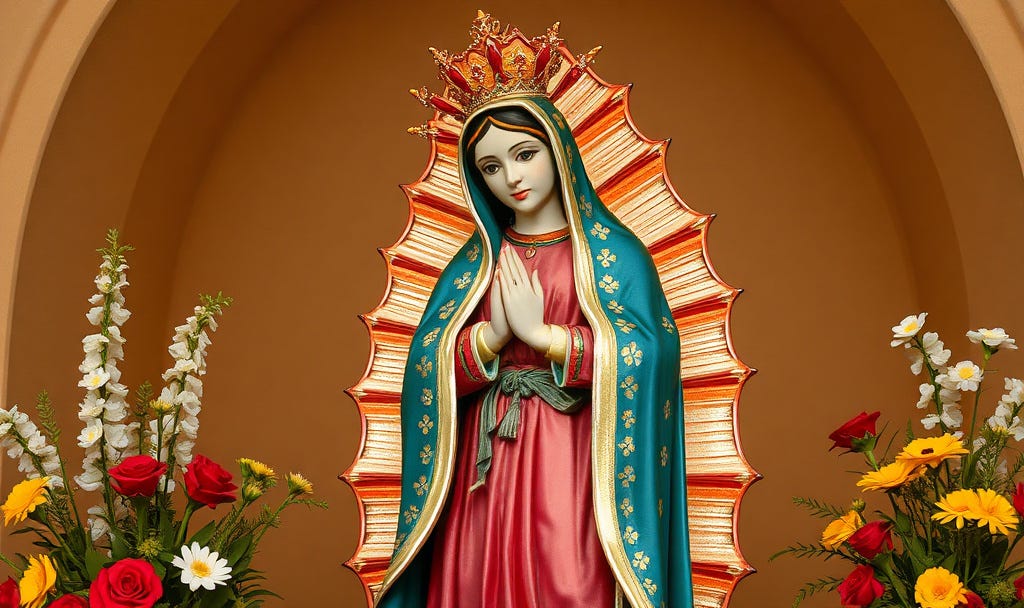
The same pattern appears in the story of Our Lady of Guadalupe. She does not appear to the powerful or the credentialed. She appears to Juan Diego, a man the world had already decided did not matter. She speaks his language. She sends him back to be seen again. The miracle is not spectacle, but attention. A refusal to erase.
What unsettles me most is not only what evil does to its victims, but what it asks of the rest of us.
This matters now because evil does not only destroy through violence.
Evil survives through recruitment.
It looks for hosts. It looks for institutions, languages, and traditions it can inhabit without being questioned.
To let evil enter within us, even when it arrives cloaked in righteousness or certainty, is to continue giving it glory. It reshapes us. It trains us to confuse loyalty with silence and belonging with blindness.
I know how easy this is. I feel the pull myself.
The life of Jesus points in the same direction. Again and again, he refuses to return violence for violence. He names injustice without taking up the sword. He walks toward suffering without becoming what oppresses. He does not save the world by killing his enemies, but by refusing to let hatred have the final word.
This is not weakness.
It is moral clarity at great cost.
Across Latino and Latina folk spirituality, evil is often understood not only as harm, but as forgetting. Forgetting names. Forgetting faces. Forgetting that someone is a mother, a poet, a neighbor. Forgetting that dignity precedes legality. Forgetting is how cruelty becomes reasonable.
And the response is almost always the same.
Acompañamiento. Accompaniment.
Ternura. Tenderness.
Presencia fiel. Faithful presence.
Or, as it is often lived rather than explained:
Don’t take my life.
See me.
Which is why remembrance becomes resistance.
This is why a walk for peace is not weakness.
It is not ineffectiveness.
It is a refusal to give evil more territory.
Not softness, but peace.
Not compliance, but presence.
Not forgetting, but remembering.
Good God, this grief is heavy.
Still.
And still, it is good grief if it keeps us human.
Tonight, I am not sleeping because the world feels broken.
But I can rest in knowing that I do not have to let that brokenness take up residence in my soul.
I’ll see you Tuesday.
Before sleep, I want to leave you with a poem by Howard Thurman, Life Goes On. It doesn’t resolve the grief or explain it away. It simply reminds us that beneath the noise, beneath the cruelty, beneath our fear, there is a deeper current still moving. This poem has helped me breathe tonight. Maybe it will help you too.
**If this reflection helped you stay human tonight, feel free to share it with someone who might need it too. You can subscribe here if you’d like to keep walking together. I’ll be back Tuesday morning with a more polished essay.
Thank you, Daniel. A much-needed reminder.
Thank you Daniel. So beautifully written and inspires me to consider so much.