


“Let everything happen to you: beauty and terror. Just keep going. No feeling is final.”
-Rilke, Book of Hours
There was once a musician named Orpheus whose songs could soften stone and quiet animals. He loved Eurydice.
The myths barely mention their happiness. That feels honest. Joy is rarely archived. It happens in passing. A hand at your back while you rinse a plate. A laugh from the next room. By the time you realize you are inside it, it is already thinning into memory.
Eurydice steps into grass.
A snake strikes.
One breath divides the story into before and after.
Loss is rarely cinematic. It is abrupt. Administrative. A door closes and does not reopen. You feel like you’re in a whole new world, but you haven’t taken a step.
Orpheus does what grieving people do. He refuses the authority of death. He sings until his throat burns. He walks into the underworld with nothing but an instrument pressed against his ribs.
For once, death listens.
She may follow him back to the living.
She will walk behind him, just out of sight.
Do not turn around.
That is the condition.
Trust what you cannot see.
The climb begins.
Stone beneath his palm. Air thinning. A blade of light ahead.
Behind him, silence where her footsteps should be.
He knows the rule. He knows it in his head the way you know not to touch a hot stove.
But knowledge does not override reflex.
This is the part that undoes me.
It is not a dramatic decision. It is not a crisis of belief. It is a twitch. The neck moves before the will does. Like when someone says your name and your body answers before your mind has agreed.
He turns.
For a flicker she is there.
And then she isn’t.
We call this failure. We call it lack of faith.
I don’t think that’s right.
Love wants to see.
Love wants confirmation.
Love wants one more look at what it cannot bear to lose.
I have turned like that.
I leave a job I have outgrown. The future is uncertain but open. Still, I refresh the old inbox. The glow of the screen washes my face at midnight. I reread messages as if they might pull me back into something solid.
I end a relationship that needed to end. We both felt it thinning for months and years. Alone at night, I scroll through old texts. I enlarge a photograph with my fingers as if I could stretch a moment back into permanence.
I prefer the wreckage because at least it is visible.
Hope asks me to walk toward what I cannot yet prove.
That feels reckless.
That feels arrogant.
Sometimes even selfish.
What if this was as good as it gets?
What if I do not deserve better?
What if the silence behind me is the last real thing I will ever hear?
So I turn.
Not because I lack faith.
Because I am human.
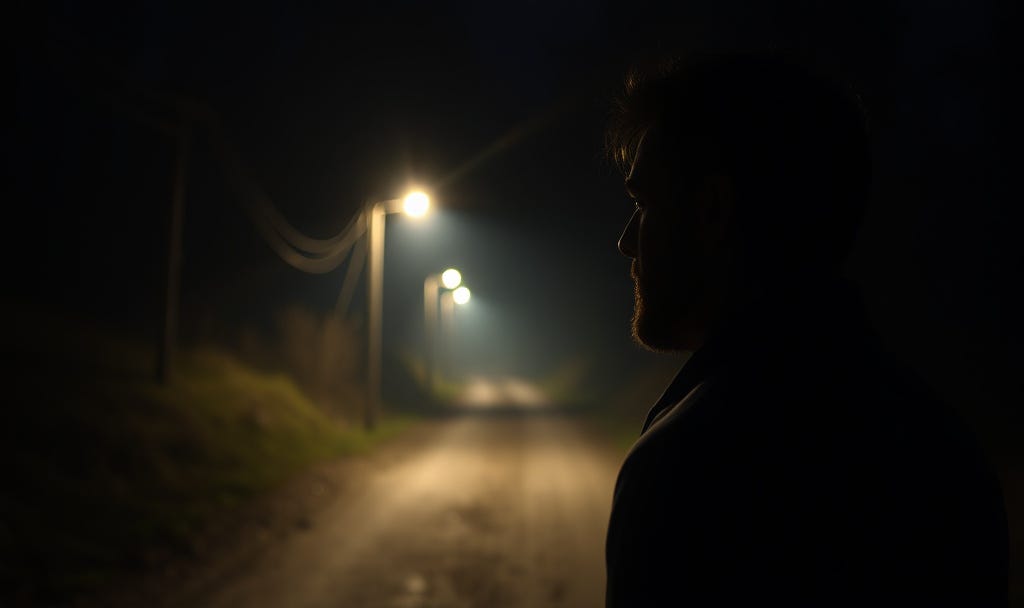
There is another story about turning.
A family fleeing a city cracking apart in flame. Heat at their backs. Smoke in their lungs. A clear command: do not look back. Lot’s wife looks anyway.
She becomes salt.
We call it disobedience. I hear longing. I hear someone who needed to see, just once more, that what she loved had weight. Salt preserves. Salt keeps what would otherwise dissolve. She becomes a pillar of memory.
But pillars cannot walk.
Orpheus turns and loses her again.
Lot’s wife turns and cannot move.
Sometimes when we walk forward, we lose things too.
The familiar warmth of the pillow is gone. The house you once inhabited in your own chest is no longer there. Certain laughter will never happen again in quite the same way. And Eurydice will always be a small weight on your sternum when you pass a snake in the garden.
This is true.
Walking on does not erase loss. It confirms it.
But what we call losing is often integration.
Henri Nouwen once wrote, “The great mystery of the spiritual life is that we do not lose the people we love. They become part of us.”
The past does not vanish. It travels differently. Not a stone you drag behind you. A scar that moves with your skin. A story that hums under your breath without asking to be relived.
I still turn sometimes.
I check the old messages. I rehearse old conversations in the shower, where I am articulate and devastating and always win. I press on the bruise just to feel it answer back.
And sometimes, yes, by turning I lose momentum.
But when I walk forward, I do not lose love.
I lose proximity.
I lose the exact shape of things.
I lose the warmth of the pillow.
Love does not run out.
It changes form.
From touch to memory. From presence to pulse.
Integration is slower than certainty. Certainty can be catalogued. It can be measured in what is no longer there.
Integration builds quietly. Like muscle grown from lifting what once felt unbearable.
Hope is not denial.
Hope is defiance.
Hope refuses to let the past have the final say in who you are.
Hope does not promise reunion.
It does not promise that what you loved will return in its original form.
It promises something harder.
It promises that your capacity to love is larger than any single loss.
That grief may shape you, but it does not own you.
Orpheus loses Eurydice.
But he does not lose his capacity to sing.
Lot’s wife becomes salt.
And even salt keeps memory from dissolving.
We turn because we are human.
But we walk on because something in us still leans toward light.
You will still feel the weight in your chest when the garden rustles.
You will still miss the warmth of the pillow.
You will still turn sometimes.
And you will keep walking anyway.
Because the past is part of you.
It is not the end of you.
peace.
**** Just a quick note - I really appreciate your comments and support. Thank you.
If you’d like, please consider sharing, liking, subscribing, etc.****
About the author: Daniel Gutierrez, Ph.D., LPC, CSAC, is a Contemplative Existential Psychotherapist, Mental Health Researcher, Professor & person who sometimes turns
Daniel….Your writing touches my very soul. Thank you.
Bonnie