

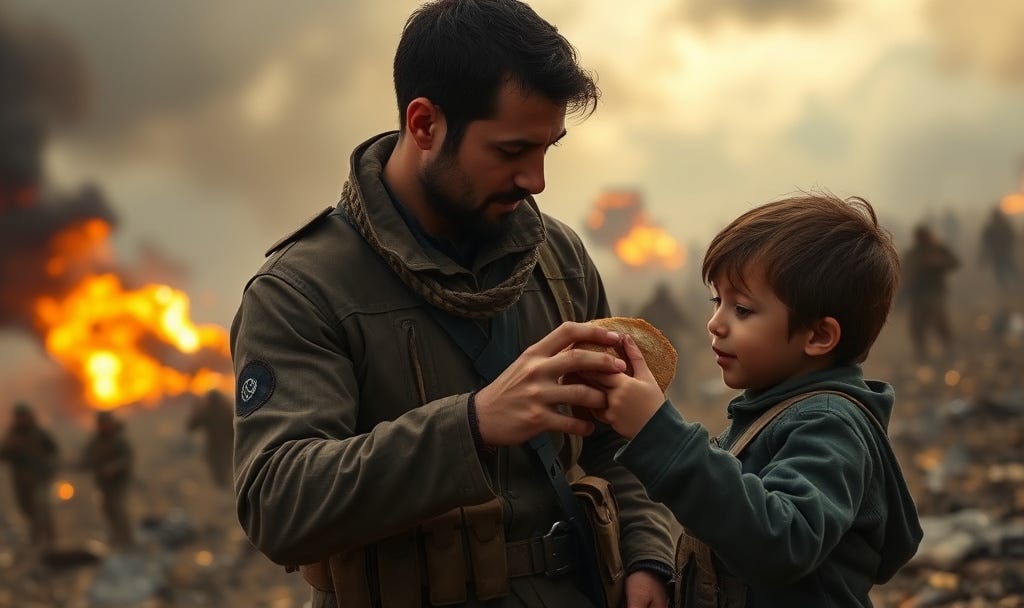
“No man is an island.”
— Thomas Merton, No Man Is an Island
The internet has developed a peculiar suspicion of empathy.
Apparently, caring too much about other people is now one of the great moral dangers of our time.
The online mob claims that empathy is biased, exhausting and makes us irrational.
Fair enough.
Paul Bloom has made this case better than most. In Against Empathy, he argues that empathy can be a poor moral guide because it is narrow, partial, and easily captured by whoever is closest, most familiar, or most emotionally vivid.
He is not entirely wrong.
Empathy can behave like a flashlight with dying batteries, illuminating one face while leaving a whole crowd in the dark.
But here is where I part ways with the anti-empathy crowd.
The fact that something is flawed does not mean it is useless.
Democracy is flawed. Airplanes are flawed. Medicine is flawed. Courts are flawed. Families are flawed. Language is flawed. My ability to assemble IKEA furniture is not just flawed it is spiritually revealing.
But we do not respond to flawed things by burning them down and calling the ashes maturity.
We refine them.
Empathy needs reason. It needs justice. It needs boundaries. It needs institutions.
It needs policy, budgets, and the long, unsexy work of meetings where someone says, “Let’s circle back,” and everyone briefly considers becoming a goat farmer.
But without empathy, reason can become cold, justice can become abstract, boundaries can become walls, and institutions can become machines that process suffering without ever feeling the weight of it.
Recently, I encountered a version of the anti-empathy argument that stayed with me. I was at the gym when one of the instructors began talking about what he called “suicidal empathy.” It was in relation to immigration policy, but that doesn’t matter here.
What unsettled me was the implication that empathy itself had become the problem.
I left class early.
Not because I disliked the instructor. He’s a nice guy and has a right to express whatever his opinion might be when he’s recovering from engaging his glutes.
But, I left because I could not sit there and quietly accept the idea that empathy is some kind of disease.
When I look at history, anthropology, neuroscience, spiritual wisdom, and the people I most admire, I do not see empathy as the force that destroys civilization.
I see it as one of the forces that makes civilization possible.
Because empathy is not merely a feeling.
Empathy is a civilizational technology.
Technology, at its simplest, helps us reach beyond our natural limits.
Fire allowed us to cook.
Language allowed us to coordinate.
Writing allowed us to preserve knowledge.
Empathy allowed us to cooperate beyond kinship.
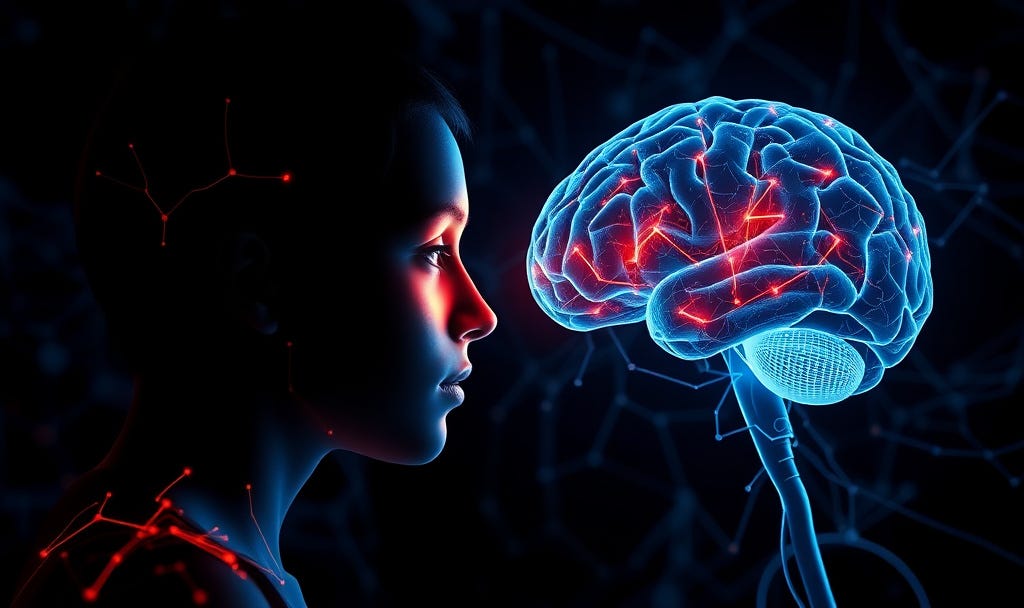
If empathy sounds like sentimental fluff, neuroscience offers a useful reality check. Researchers such as James Blair, an expert in the neurobiology of emotion, aggression, and antisocial behavior, have spent decades studying what happens when people struggle to recognize and respond to the distress of others. His work suggests that the ability to perceive suffering is deeply connected to moral development itself.
The inability to register another person’s distress is not a superpower.
It is a deficit.
At the other end of the spectrum is the work of Abigail Marsh, who studies extraordinary altruists, including people who donate kidneys to complete strangers. Her research reveals psychologically healthy people whose sensitivity to the suffering of others appears unusually developed.
That should probably tell us something.
When scientists study some of humanity’s most destructive behaviors, they often find deficits in empathy. When they study some of humanity’s most selfless behaviors, they often find empathy enlarged.
Anthropology tells a similar story.
Human beings did not survive because we were the strongest. We survived because we became extraordinarily good at helping one another.
Human infants are among the most helpless creatures on Earth. No mother could have done this alone. Our ancestors survived because entire communities participated in caregiving.
Evolution favored intelligence, yes.
But it also favored cooperation, caregiving, and the ability to recognize need and respond to it.
In other words, empathy did not emerge after civilization.
Empathy helped create civilization.
Which may be why nearly every wisdom tradition worth its salt keeps circling back to some version of neighbor-love.
Love your neighbor. Welcome the stranger. Feed the hungry. Care for the prisoner. Protect the vulnerable.
Different languages.
Different rituals.
Different casseroles.
Same stubborn insight.
The command to love your neighbor was never just a private virtue.
It was public infrastructure.
And this is where things get uncomfortable.
Much of organized religion still knows how to talk about the poor. It is less clear that it always wants to stand with them.
Especially in America, where large portions of public Christianity have wrapped themselves so tightly around the political right that compassion can become a slogan on the wall while solidarity gets escorted quietly out the side door.
The poor are praised in sermons and punished in budgets. The stranger is welcomed in theory and detained in practice. The prisoner is prayed for, provided he does not ask us to rethink prisons.
There is a difference between kindness and solidarity.
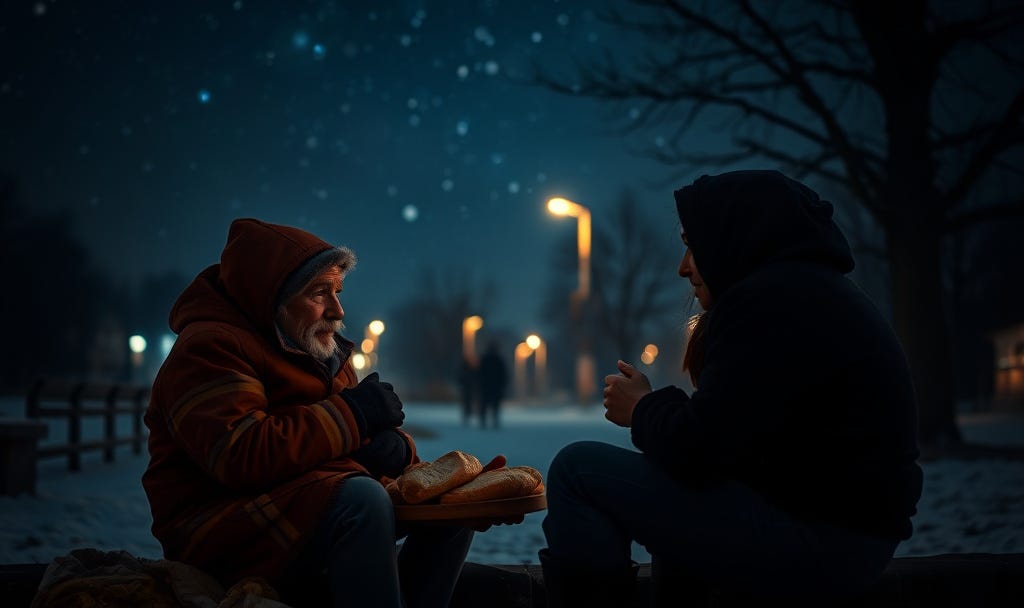
Kindness can hand someone a sandwich and remain safely above them.
Solidarity sits down on the curb, feels the cold concrete through its jeans, and asks why so many people are hungry in the first place.
This is part of what liberation theology has been trying to tell us. Gustavo Gutiérrez helped articulate the “preferential option for the poor,” the insistence that faith must take its place beside those crushed by poverty and power.
The poor are not a decorative object for religious compassion nor a seasonal outreach project. They are neighbors with names. Bearers of wisdom. People whose suffering reveals something about the systems the rest of us have learned to call normal.
The mystics and holy troublemakers have always known this. Dorothy Day and the Catholic Worker movement tied love to hospitality, poverty, labor, peace, and the daily practice of mercy.
Love, in that tradition, was not a scented candle.
It was a soup pot.
A protest sign.
A shared table.
A body getting tired beside other tired bodies.
That is why the attack on empathy feels spiritually dangerous to me.
Not because empathy is perfect.
It is not.
Empathy gets biased. It gets tired. It sometimes needs a snack.
But empathy is how the neighbor stops being an issue and becomes a face.
Kindness asks, “How can I help you feel better?”
Empathy asks, “How is your pain connected to my life?”
Solidarity asks, “What are we going to change together?”
Empathy is not the whole work.
But without empathy, the work never begins.
It is one of the mechanisms through which human beings remember that we belong to one another.
And that memory matters.
Because without that memory, civilizations do not thrive.
They unravel.
peace,
Daniel
About the author: Daniel Gutierrez, Ph.D., LPC, CSAC, is a Contemplative Existential Psychotherapist, Mental Health Researcher, Professor & Empathy Advocate
Great meditation on the role empathy plays in a well-functioning world. I would add that Empathy is an important stepping stone to Compassion. To get "stuck" in empathy can become toxic, disempowering, and exhausting. Shifting to Compassion from empathy brings the capacity for action, which is empowering and energy-producing. Thanks for the great read!